Let's take a dive into the wide wonderful world of literary technique, shall we? I read Sally Minogue's article "Was it a Vision? Structuring Emptiness in To the Lighthouse." What Minogue deals with most prominently is the sense of juxapostion...although she uses much more fancy and thereby obfuscating terms; basically, she's concerned with Woolf's ability to enact bathos, which is a ludicrous descent from the exalted to the commonplace, or an anticlimax, according to dictionary.com anyway. What Minogue is examining her is the effect this has on "To the Lighthouse," especially the "Time Passes" portion. She focuses on the nature of the passage itself--its fleeting view of the characters at the start--two of which are going to be dead by the end of the section--and its feel of a single act despite being divided into chapters.
As such, I'm going to through another term at you: zeugma, which is defined in-article as "a figure of speech in which words or phrases with widely differing meanings are 'yoked together' with comic effect by being syntactically dependent on the same word, often a verb." This is where I started with juxtaposition: the comic effect comes from this two widely differing ideas being spliced next to each other. For example:
"On September 11th, 2001, hijack planes crashed into the Twin Towers and the Pentagon, causing widespread destruction, panic, chaos, and the deaths of thousands of people; and worst of all, the entire day I could not get that seed out of my teeth."
Two completely unrelated things yoked together to comic effect. But Cameron, you say, this sentence is funny--we don't know why, but it is--but it's also horrifying! And I would say, yes, the horror is what exactly makes the thing funny; see, the juxtaposition is so jarring that we have an involuntary reaction to it--in this case, laughter. Minogue argues the exact same thing occurs in time passes, including the horrific nature. It functions because "Woolf [created] a fictional world of such power that the read is, and is surely intended to be, taken in by it." (289) The entire first part of the novel is a buildup, following the pattern of bathos, culminating in the truimphant dinner and Mrs. Ramsey exuberant happiness. Then we get to time passes, whichis full of some of the most beautiful wordage in the english language, and a profound emptiness. The buildup of the novel is entirely crushed; the reader is instead compelled to focus on an empty and dying house, rotting away due to neglect, in varying stages of decomposition--and intermittent between all this are the glimpses of our characters live, all horrifying, and all hilarious in their juxtaposition and tone of flippancy. As Minogue says "Here [the brackets] carry of the force of the novelist's own apparent indifferance, her 'Oh, by the way." (290). As in "Oh, by the way, Mrs. Ramsey died. Oh, by the way. Prue died. Oh, by the way, Andrew was killed." A veritable massacre takes place in "Time Passes," with the entire emotional weight of a metronome attached to it. Minogue explains the power of the brackets in this case: "The clear implication of the square bracket in all its uses in 'Time Passes' is that what passes within them is less important than what happens outside them." (290) How beautiful the house is described, wasting away. How flippantly, the deaths of three characters that have been carefully constructed in the first 150 pages. This is bathos and zeugma at its finest.
And the result, as mentioned before, is a jarring effect, the equivalent of a slap to the face; my God, these deaths mean nothing! "Furthermore," Minogue elaborates, "the incongruity between the stumbling Mr. Ramsey--who has in any event been largely a figure of fun in "The Window"--and the tragic figure that he should cut, seems to be endorsed by the author, who leaves absolutely no room for emotion in the sentence." (291) She goes on to talk about how Mr. Ramsey gets no chance to be a tragic figure that he deserves to be (on a side note, this is ironic, considering how much he has wanted attention in the first part), and the reader, desiring to feel sympathy, is left unable and impotent. The reader loses the power to connect--the zuegma has jarred them so sufficiently that all they can do is gape and stumble around and hope to gain some footing again; and remember, Woolf does this three times!
The reader is effectively traumatized, his world blown apart whether he realizes it or not; or, as Minogue more eloquently imparts: "In this analysis, then, To the Lighthouse can never recover from the laconic shock of 'Time Passes," its undercutting of the human, its depersonalization of what had been so fully, if fictionally, lived." (293, emphasis mine) And, further on: "Woolf has found and perfected techniques which allow a creative balance of those contradictions, making it fully representational of the uncloseable chasm between life in all is felt beauty and death, which renders it meaningless." (294) The beauty of life is found in the perfect diction making up most of "Time Passes." The death is found in the brackets--but it is the brackets that make us remember. The beauty is lost, all that's left is the death.
Wednesday, September 29, 2010

Saturday, September 25, 2010
To the Lighthouse
First off, To the Lighthouse is definitely the most accessible of Woolf's works so far; I had little trouble understanding it, and I only had to read some paragraphs at the most two times! Although there is the possibility that I was so hyped up on caffeine while reading it that I was experience some type of preternatural focusing and mental alacrity.
Anyway, one of the biggest things I came away with after reading this first part is this sense of contradiction. EVERYONE in this novel has conflicted feelings about EVERYTHING. Mr. Ramsey's annoyed by and unable to survive without his wife, Mr. Tansley can't decide whether he wants everybody to hate him or to love him, Mrs. Ramsey can't seem to figure out WHO she is--possibly because she thinks she has to do whatever's necessary to please Mr. Ramsey, though the more she tries the more alienated Mr. Ramsey becomes, because he's so hopelessly dependent on her...whoa, circle, circle, circle, am I right?
I think it's really interesting the progress Woolf's made on the techniques of viewpoint hopping. Each person's thoughts flow into the other's so well that you don't even realize the POV has switched unless you really stop and think about it; but even then, the transition is so smooth and unfettered that it's practically poetic. She was never really bad at this, but there were times, as we know, in Jacob's room where the rapid changes were jarring, and we got lost in the novel, forgetting who was talking and who was thinking this. But in To the Lighthouse, these blips have been ironed out, so the POV hopping is nigh unnoticeable and entirely integral to the story.
I think the character of Mr. Ramsey is fascinating, personally. He wants to control his wife--but does so because he's a useless prig without her. He hates when she asserts herself--but loves it because it means she interacting with him. One of his most common phrases towards her is "Damn you," and yet he's madly in love. He doesn't like to think of her as well read, it bothers her when she shows intelligence, and yet he gets some sort of thrill from both these things. I've read that To the Lighthouse contains a lot of Woolf's own family in it; I wonder how much of these fictional parents are, in fact, truthful.
Anyway, one of the biggest things I came away with after reading this first part is this sense of contradiction. EVERYONE in this novel has conflicted feelings about EVERYTHING. Mr. Ramsey's annoyed by and unable to survive without his wife, Mr. Tansley can't decide whether he wants everybody to hate him or to love him, Mrs. Ramsey can't seem to figure out WHO she is--possibly because she thinks she has to do whatever's necessary to please Mr. Ramsey, though the more she tries the more alienated Mr. Ramsey becomes, because he's so hopelessly dependent on her...whoa, circle, circle, circle, am I right?
I think it's really interesting the progress Woolf's made on the techniques of viewpoint hopping. Each person's thoughts flow into the other's so well that you don't even realize the POV has switched unless you really stop and think about it; but even then, the transition is so smooth and unfettered that it's practically poetic. She was never really bad at this, but there were times, as we know, in Jacob's room where the rapid changes were jarring, and we got lost in the novel, forgetting who was talking and who was thinking this. But in To the Lighthouse, these blips have been ironed out, so the POV hopping is nigh unnoticeable and entirely integral to the story.
I think the character of Mr. Ramsey is fascinating, personally. He wants to control his wife--but does so because he's a useless prig without her. He hates when she asserts herself--but loves it because it means she interacting with him. One of his most common phrases towards her is "Damn you," and yet he's madly in love. He doesn't like to think of her as well read, it bothers her when she shows intelligence, and yet he gets some sort of thrill from both these things. I've read that To the Lighthouse contains a lot of Woolf's own family in it; I wonder how much of these fictional parents are, in fact, truthful.
Thursday, September 23, 2010
Heeeeeeeey...it's criticism time!
All right, so, I dove right in to that convenient "Approaches" book I was graced with; it's a fortunate little thing, because not only are the articles relatively short, but the writer's aren't swimming in the ether trying to explain their concepts.
The article I read is called "The Proper Stuff of Fiction: Virginia Woolf and the Meaning of the Modern," by Lecia Rosenthal. As an "approach to teaching" book, its main focus is to provide teachers with ways to run a class on "Mrs. Dalloway." Specifically, Rosenthal explicates various methods on explaining, discussing, and interpreting the unique style of modernism in Mrs. Dalloway,while reflecting on modernism importance and its contributions to modern literature. She outright states that modernism's "ostensible incoherence, obscurity, and resistance to accepted norms of comprehensibility, constitute one of [its] most enduring and important legacies." (33, emphasis mine) I find this quote interesting because of its inversion of expected norms. She's arguing that the very things people disdain modernism for, and confuse even those of us who like the style, are, in fact, its most profound and affecting attributes.
I also like how she really defines what modernism is in a concise yet functioning way. It's difficult to really get at the point of why all this stream-of-consciousness and psychology matters, but Rosenthal identifies modernism's "self-referentiality, discontinuous temporalities, refusal of discreet and reliable omniscience, and pervasive irony that privileges ambiguity over certainty." (34) Especially interesting in this quote is the ideas of discontinuous temporalities--specifically the morphing function of time in Mrs. Dalloway, and the omniscience idea, when a third-person narrator seems omniscient but is, in fact, sometimes just as wrong as the reader or the characters are.
Most of the rest of the articles deals with things already covered: she goes into Woolf's essays, "Mr. Bennett and Mrs. Brown" being the forward one, and how those relate to modernism, and then ends on wondering what the "great age of literature" reference in Mrs. Brown entails, and whether or not we're living in it. Overall, it's interesting to read because by sheer necessity a teacher has to be able to sort of define and explain modernism in a palatable way, for the students to understand why everything appears fragmented and unstable. So by doing so here, Rosenthal gives some pretty good definitions and commentary on the deeper side of modernism, like what it contributed, its functions and its relevance today.
The article I read is called "The Proper Stuff of Fiction: Virginia Woolf and the Meaning of the Modern," by Lecia Rosenthal. As an "approach to teaching" book, its main focus is to provide teachers with ways to run a class on "Mrs. Dalloway." Specifically, Rosenthal explicates various methods on explaining, discussing, and interpreting the unique style of modernism in Mrs. Dalloway,while reflecting on modernism importance and its contributions to modern literature. She outright states that modernism's "ostensible incoherence, obscurity, and resistance to accepted norms of comprehensibility, constitute one of [its] most enduring and important legacies." (33, emphasis mine) I find this quote interesting because of its inversion of expected norms. She's arguing that the very things people disdain modernism for, and confuse even those of us who like the style, are, in fact, its most profound and affecting attributes.
I also like how she really defines what modernism is in a concise yet functioning way. It's difficult to really get at the point of why all this stream-of-consciousness and psychology matters, but Rosenthal identifies modernism's "self-referentiality, discontinuous temporalities, refusal of discreet and reliable omniscience, and pervasive irony that privileges ambiguity over certainty." (34) Especially interesting in this quote is the ideas of discontinuous temporalities--specifically the morphing function of time in Mrs. Dalloway, and the omniscience idea, when a third-person narrator seems omniscient but is, in fact, sometimes just as wrong as the reader or the characters are.
Most of the rest of the articles deals with things already covered: she goes into Woolf's essays, "Mr. Bennett and Mrs. Brown" being the forward one, and how those relate to modernism, and then ends on wondering what the "great age of literature" reference in Mrs. Brown entails, and whether or not we're living in it. Overall, it's interesting to read because by sheer necessity a teacher has to be able to sort of define and explain modernism in a palatable way, for the students to understand why everything appears fragmented and unstable. So by doing so here, Rosenthal gives some pretty good definitions and commentary on the deeper side of modernism, like what it contributed, its functions and its relevance today.
Saturday, September 18, 2010
Septimus!
All right so I freaked a couple of people out when I said I had a man-crush on Septimus. But I just like the character. I think Woolf did a really good job of transcribing the effects of such a crippling but intangible mental problem. It's really hard to put something like this into words--heck freaking doctors have trouble describing what goes through a mentally ill mind--but Woolf pulls it off just as well as anyone I've ever seen. This makes sense, of course, when you remember Woolf's own battles with mental illness--it takes one to empathize with one.
I love her descriptions of Septimus' thought processes. You can tell this is a person fully believing in his own sanity while everyone around him knows something is wrong: "So he was deserted. The whole world was clamouring. Kill yourself, kill yourself, kill yourself, for our sakes. But why should he kill himself for their sakes?" What makes this hit home is the almost detached, tranquil tone of the sentence and others like them. This isn't a person in the violent throes of passion that leads to a suicide a la Romeo and Juliet. This is a person who in their own mind is completely rational, contemplating the reasons why he should and should not kill himself. Equally disturbing is the hallucinations of transfiguring men and hellfire. Septimus feels almost like he has a God-like insight to humanity: he can sum up humanity's entire existence in the character of Mr. Holmes, whom he calls "human nature." And boy, does he hate human nature. He feels it is responsible for the terrible burden he's feeling; on that note, I think it's interesting that "Septimus" is Latin for "seven" or "seventh." It makes you wonder: seven what? The seven deadly sins of humanity, perhaps? Perhaps I'm reaching here, but I think this may be a viable reading of Septimus character. His mental trauma makes him more attuned to the sins of humanity, to its ever-burgeoning presence. Humanity presses in on him, cutting off his air, little by little; it is only when he focuses on one thing at a time that he can hand reality, as in 140-147. Even then, it's not enough.
I also feel strongly for Rezia, and I empathize with her predicament. It's difficult to deal with someone stricken with mental illness; in someways, it can be more hurtful to the people around the ill person than for the ill person himself. Rezia's torn between two desires. She has a flickering desire to just put him in a home somewhere and be done with him, but it's immediately staunched by the guilt of leaving a traumatized person to his own destruction. But what's the right decision? Should someone have to sacrifice their own sanity and life for another, especially if their little hope for recovery. Do people have to be burdened with a mindless glop of flesh lacking almost all ability of autonomy? Is that fair? But then again...what's the alternative? To stick this person somewhere and just forget about him? Isn't that the height of selfishness? Because certainly it's not the person's fault that his mind's this way; what does that make the people who decide to leave him to the dogs?
Equally accurate is Woolf's portrayal of the doctors; again, it comes as no surprise considering her own experiences, but it's still interesting to see. This doctor thinks nothing's wrong with him, he's just being silly; well, he's an idiot, so they go to Sir-what's his face. This doctor has more of a head on his shoulders, but he does little more than pull an extreme version of what the first doctor thought. More rest, more rest, more rest! Oh, and a sense of proportion. As if things could be so simplified. As Woolf wrote--and I'm paraphrasing here cause I don't remember the page--he was the type that wouldn't be satisfied until a person that went in weight six stone came out weighing twelve.
What makes this hilarious is that it's eighty years and nothing really's changed. The medicos still think the same way, except instead of rest, it's pills. Pills! Pills pills pills! Pills fix everything!Oh, you mean this pill is causing symptoms worse than the thing we were trying to fix? Well, here's another pill to fix that symptom! Oh, now that pill is causing injurious symptoms? Well here's yet another pills! Yes, Yes, guzzle your pills, twelve, thirteen, fourteen a day! Lithium depakote geodon lyrica klonopin! That'll cure you! Who needs a liver? Who needs an I.Q. over forty!? I'd almost prefer the original disorder. It's amazing how prescient Woolf is, and how well she gets to the bare root of human nature; I mean, seventy years after her death and we're still doing the same old crap that she was satirizing!
So yeah, that's why I like Septimus, cause his character is perfectly truthful, and the characters around him are perfectly truthful.
I love her descriptions of Septimus' thought processes. You can tell this is a person fully believing in his own sanity while everyone around him knows something is wrong: "So he was deserted. The whole world was clamouring. Kill yourself, kill yourself, kill yourself, for our sakes. But why should he kill himself for their sakes?" What makes this hit home is the almost detached, tranquil tone of the sentence and others like them. This isn't a person in the violent throes of passion that leads to a suicide a la Romeo and Juliet. This is a person who in their own mind is completely rational, contemplating the reasons why he should and should not kill himself. Equally disturbing is the hallucinations of transfiguring men and hellfire. Septimus feels almost like he has a God-like insight to humanity: he can sum up humanity's entire existence in the character of Mr. Holmes, whom he calls "human nature." And boy, does he hate human nature. He feels it is responsible for the terrible burden he's feeling; on that note, I think it's interesting that "Septimus" is Latin for "seven" or "seventh." It makes you wonder: seven what? The seven deadly sins of humanity, perhaps? Perhaps I'm reaching here, but I think this may be a viable reading of Septimus character. His mental trauma makes him more attuned to the sins of humanity, to its ever-burgeoning presence. Humanity presses in on him, cutting off his air, little by little; it is only when he focuses on one thing at a time that he can hand reality, as in 140-147. Even then, it's not enough.
I also feel strongly for Rezia, and I empathize with her predicament. It's difficult to deal with someone stricken with mental illness; in someways, it can be more hurtful to the people around the ill person than for the ill person himself. Rezia's torn between two desires. She has a flickering desire to just put him in a home somewhere and be done with him, but it's immediately staunched by the guilt of leaving a traumatized person to his own destruction. But what's the right decision? Should someone have to sacrifice their own sanity and life for another, especially if their little hope for recovery. Do people have to be burdened with a mindless glop of flesh lacking almost all ability of autonomy? Is that fair? But then again...what's the alternative? To stick this person somewhere and just forget about him? Isn't that the height of selfishness? Because certainly it's not the person's fault that his mind's this way; what does that make the people who decide to leave him to the dogs?
Equally accurate is Woolf's portrayal of the doctors; again, it comes as no surprise considering her own experiences, but it's still interesting to see. This doctor thinks nothing's wrong with him, he's just being silly; well, he's an idiot, so they go to Sir-what's his face. This doctor has more of a head on his shoulders, but he does little more than pull an extreme version of what the first doctor thought. More rest, more rest, more rest! Oh, and a sense of proportion. As if things could be so simplified. As Woolf wrote--and I'm paraphrasing here cause I don't remember the page--he was the type that wouldn't be satisfied until a person that went in weight six stone came out weighing twelve.
What makes this hilarious is that it's eighty years and nothing really's changed. The medicos still think the same way, except instead of rest, it's pills. Pills! Pills pills pills! Pills fix everything!Oh, you mean this pill is causing symptoms worse than the thing we were trying to fix? Well, here's another pill to fix that symptom! Oh, now that pill is causing injurious symptoms? Well here's yet another pills! Yes, Yes, guzzle your pills, twelve, thirteen, fourteen a day! Lithium depakote geodon lyrica klonopin! That'll cure you! Who needs a liver? Who needs an I.Q. over forty!? I'd almost prefer the original disorder. It's amazing how prescient Woolf is, and how well she gets to the bare root of human nature; I mean, seventy years after her death and we're still doing the same old crap that she was satirizing!
So yeah, that's why I like Septimus, cause his character is perfectly truthful, and the characters around him are perfectly truthful.
Thursday, September 16, 2010
Heeeeey........It's Criticism Time!
Since we haven't finished Mrs. Dalloway yet, I thought I would check out another article on Jacob's Room. It's called "Minding the Gap: The Spaces in Jacob's Room," by Edward Bishop, and man is it interesting. It's readable, pertinent, and honestly made me think about the function of the blank spaces that we so caustically skip over in the novels we read.
Basically, it boils down to this: Bishop is making the argument that blank spaces in Jacob's Room serve a very distinct purpose in the meaning of the novel. He uses Woolf's interest in the "silence rather than...speech" (pg. 32, Woolf's quote) aspect of one of the earlier modern authors. Not to mention her interest in poetry, and the power that medium has in using the physical space of the page, i.e, where to end a line, whether to space the stanzas, etcetera. According to Bishop, Woolf "was aware o the potential of space, but [did] not use it immediately in the writing of Jacob's Room." (34). Rather, she typed the whole of the text first, and then added in the breaks as "part of the evolving shape of her novel." (34)
He then goes on and gives samples of the literally dozens of large space breaks in Jacob's Room and how they affect the text in which they are a part. The issue at play here is not just what the breaks represent, but the intentional deletion of the spaces by Harcourt and Brace, the American publishers of the novel. Bishop makes clear that there was nothing malevolent involved, and that the editors were just minimizing what to them just seemed to be random blank stretches (Woolf herself never seems to have brought up the issue), but he does put forth the idea that the deletion of the blank stretches affects the way one looks at the passages in question: whether they are separate musings or belong to a character, whether they express inner turmoil (as in one example where a four-line space is missing after Jacob sees Florinda and a man walking up Greek Street--as in a poem, the use of space here is supposed to denote that Jacob is battling out the implications of this in his mind; but the removal of the space in the American edition also removes any sign of that), and even WHO the subject of the passage is, all of which are pretty significant when you get to the level of literary criticism that we're at, where whole thesis can revolve around one word. Upon explicating another example, Bishop posits that "spatial configuration is crucial: with the gap we continue our tunnelling into the past [of the passage in question], without it we slip easily back into the unfolding present." (37)
What more I find interesting is the implications involved in understanding: we already know translating texts into other languages could cause problems, but how about minimizing the amount of line breaks? I can't remember if our edition possessed the spaces or not; but if it did not, did it make the novel more impenetrable and confusing than it should have been? It's something to think about. As Bishop says in near the end of the article: "I would argue that readers in England and America, even though they may be reading the same words, are reading very different texts."
Basically, it boils down to this: Bishop is making the argument that blank spaces in Jacob's Room serve a very distinct purpose in the meaning of the novel. He uses Woolf's interest in the "silence rather than...speech" (pg. 32, Woolf's quote) aspect of one of the earlier modern authors. Not to mention her interest in poetry, and the power that medium has in using the physical space of the page, i.e, where to end a line, whether to space the stanzas, etcetera. According to Bishop, Woolf "was aware o the potential of space, but [did] not use it immediately in the writing of Jacob's Room." (34). Rather, she typed the whole of the text first, and then added in the breaks as "part of the evolving shape of her novel." (34)
He then goes on and gives samples of the literally dozens of large space breaks in Jacob's Room and how they affect the text in which they are a part. The issue at play here is not just what the breaks represent, but the intentional deletion of the spaces by Harcourt and Brace, the American publishers of the novel. Bishop makes clear that there was nothing malevolent involved, and that the editors were just minimizing what to them just seemed to be random blank stretches (Woolf herself never seems to have brought up the issue), but he does put forth the idea that the deletion of the blank stretches affects the way one looks at the passages in question: whether they are separate musings or belong to a character, whether they express inner turmoil (as in one example where a four-line space is missing after Jacob sees Florinda and a man walking up Greek Street--as in a poem, the use of space here is supposed to denote that Jacob is battling out the implications of this in his mind; but the removal of the space in the American edition also removes any sign of that), and even WHO the subject of the passage is, all of which are pretty significant when you get to the level of literary criticism that we're at, where whole thesis can revolve around one word. Upon explicating another example, Bishop posits that "spatial configuration is crucial: with the gap we continue our tunnelling into the past [of the passage in question], without it we slip easily back into the unfolding present." (37)
What more I find interesting is the implications involved in understanding: we already know translating texts into other languages could cause problems, but how about minimizing the amount of line breaks? I can't remember if our edition possessed the spaces or not; but if it did not, did it make the novel more impenetrable and confusing than it should have been? It's something to think about. As Bishop says in near the end of the article: "I would argue that readers in England and America, even though they may be reading the same words, are reading very different texts."
Thursday, September 9, 2010
Briggs, Jacob, and a Helping of Le Guin
Since we're finishing up our talk of Jacob's Room today, I thought it pertinent to do my second critical article on him. I checked out the Jacob chapter of Julia's Briggs book An Inner Life, which I thought I would enjoy since it dwelt more on Woolf's writing process.
It was surprising, then, to find that a great majority is dedicated to the historical implications and context of the novel. The very first sentence is jarring: "Woolf's third novel, Jacob's Room, is her protest against the First World War and the shocking impersonality of its killing machine." (84) To be quite frank, I don't know how much I can agree with that statement. I mean, to be sure, the War figures prominently in the background--but if looked at from a New Critical approach--no, no, let's take it even further. Say some schmuck picks up a copy of the novel on the whim from the library, reads it without any historical context. Would said schmuck even realize the war was featured? The death of Jacob at the end is pretty plain with a little bit of interpretation of literary legerdemain, but dates are hardly ever mention, the War doesn't even appear until the last ten pages, and then only subtly, and Jacob's death is never given detail other than the fact that it happened. Does this really constitute a "protest against the shocking impersonality of its killing machine?" I dunno, maybe. Perhaps Briggs is looking at it from the perspective of the reader-of-the-time, who would probably have the War in the background of his mind whether it's hinted at or not. Or maybe I just didn't get a portion of the novel. But I don't know...
The main reason it's such a big deal is that this first sentence covers a great deal of the article; a large majority of it is focused on Woolf's stance on War, her actions, her beliefs about violence, etc., all in an attempt, I surmised, to encapsulate what she focused on in the novel itself. But I think such a bare-bones interpretation does little more than undo what Woolf was trying to accomplish through her new form; that is, show life in all its vagaries and intricacies--but turning Jacob's Room into a simple war elegy cut all of that out--and, in fact, is incorrect all together, or so it seems to me. I mean, if we were going to compress Jacob to its bare minimum, just from subject matter alone I'd say it's more a testimony to the oppressing power of patriarchy and how it harms both men and women...but that, too, excises a great portion of the novel. It's a lot simpler just to try not to boil down Jacob to its essence in any way; I think Vara Neverow captured Jacob well in her introduction, but lest we forget it's almost half as long as the novel it's introducing.
I do, however, think Briggs' article gets better when she gets down to the nitty-gritty. I think one of her introductions to Jacob is a great testament to the intentions of the novel: "her hero was not to be heroic." (93) Woolf was trying to show the truth of life without all the meaningless fetters--in the post-WWI generation, this was especially necessary. One of my favorite portions of A Farewell to Arms is when Hemingway muses on how the "old words" like honor and glory had lost all significance after the war. Here, Woolf tries to take those old words out of life, too, and show it how it really is.
The article, too, gives good insight to Woolf's conscious intentions: the "multiplying characters, many...glimpsed only momentarily, contrast with the purposeful and elaborately coincidental plot-weaving of the traditional novel..."(96) And it has a really good piece about Woolf's recognition of the need of self-censorship--especially in the realm of sex. Obviously, all the sex in the novel is implied only, and some of it is so vague that we aren't sure what's going on, i.e. the two red-faced people on the beach. And I liked the part about the "Aftermath" of the publication, especially the varied reviews--and of those, especially ofHarold Bloom Mr. Bennett, whose rather arrogant dismissal of the novel comes back to bite him oh-so-hard.
Speaking of Mr. Bennett, I wonder what he would think if he saw today that the only reason he's much remembered is that he's the guy whose vitriol inspired a classic essay which survived long after his condemnations were deemed untoward? Ah, I'm being too harsh, I'm sure he was a good guy.
But I did like Mr. Bennett and Mrs. Brown the most of the essays which we read, with "How to Read a Book" rounding in second. I'll get to the former in the moment. For the latter, I just want to say, Amen! I hate whenHarold Bloom critics try to use their various means of puffery to decide for us what constitutes worthwhile reading and what does not; clearly, this problem was just as present in Woolf's era. But she doesn't, however, let all books off the hook, most specifically the "fake" ones written by "fake" authors, who she condemns in typical vituperative Woolfian fashion. Also of note is this connective idea--that she asks the reader to "become" the author in a step of reading the book. My interpretation is something that I have always liked the idea of, which is a meeting of the minds between author and reader, bringing about a sort of synthesis of thought that makes reading an experience, rather than a drudgery; ones the experience is made, it is indelible, like that first trip to Disneyworld or that first makeout session; similarly, her idea of criticism, which "light[s] up and solidifies the vague ideas that have been tumbling in the misty depths of our minds." To take it a step further, I think all fiction does this; I think fiction puts into words our worst fears, and the things which we do not know. One of my first authors I remember reading heavily was Stephen King, (who retains his power over me to this day--it's one of the only things I really wish, is to be able to meet him). From King, before I witnessed any of this, I was introduced to the nature of true madness (The Shining), the danger of what is too good to be true (The Tommyknockers), the horror and mental scarring that comes along with the memory of atrocity (Apt Pupil), the power of childhood innocence (It), the risks of obsession (Misery), and the overwhelming power of the human spirit when combined in solidarity and focused on one goal (The Shining, The Stand, Cujo, etc.) What was important about all these things was, I think, not that they were in these novels, but that they solidified these things for me, so that when I did, upon growing up, come in contact with real madness, real obsession, real atrocity, and real triumph, I was able to interpret and handle it with it damaging a sheltered psyche.
Aaaanyway, about that other essay, Mr. Bennett and Mrs. Brown. It was interesting, because I was thinking about the idea of "velocity" in Woolf's work--which is becoming more and more appealing to me--and, more specifically, how it's related to time in her work. Time and its speed being, of course, one of the most ancient of foundations of Science-Fiction (or techno-fantasy), which is my favorite genre of writing. I remember reading somewhere, actually, that Woolf really enjoyed Sci-Fi. It was in the Lee biography, and it was just the barest mention of a passage--something about her enjoying the idea of a telephone with viewscreen and something. And this makes sense, as in her lifetime Sci-Fi really reached hitherto unseen heights of popularity (that most of this was pulp is beside the point).
Anyway, time. Time has always been an obsession of Sci-Fi; Pop Quiz: what's one of the first truly sci-fi novels ever written? Ever? Yes, the Time Machine. From the beginnings of its existence, Sci-Fi and time go hand in hand. Since Woolf likes Sci-Fi, it follows that her interest in Time, and its velocity, is of an, at the very least, academic interest to her. Even in Jacob's Room, it occupies an unstated forefront, being both obviously present and completely obfuscated simultaneously. The book is supposed to describe the fleeting life of the main character---the book is only 187 pages long. Velocity is literally used as a deciding factor in length to highlight one of its myriad points. Likewise, inside the novel, the velocity hits a fevered pace and rarely slows down, save when Woolf herself, as narrator, interjects a longer paragraph. And yet most of the scenes in the novels are glimpses--like a stone skipping along the surface of Time, touching just long enough to cause ripples, which eddy and curl into each other. Then the stone sinks and disappears forever, and like a snap of the finger, the velocity cuts to zero with the final image of a pair of shoes.
This does have something to do with Mrs. Brown, I promise. In fact, I'll get to it right here. What does Sci-Fi and Mrs. Brown have in common? I actually recognized the name of Mrs. Brown, and the wording of some passages sounded very familiar, until it hit me, that Ursula K. Le Guin had written an essay on Mrs. Brown in her wonderful critical collection, The Language of the Night (which is so good I'm almost tempted to go out and just get the thing off Amazon, since it's out of print).
Le Guin is one of my favorite writers, and took her place among them with surprising alacrity, seeing that I only heard of her about half a year ago or so. At her best, she a vanilla frappe on a hot day while sitting in the shade; at her worse, and that means, when her stories are barely disguised Tracts on whatever axe she has to grind, she's still like that roller coaster at the theme park that makes you sick and yet which you still want to ride again.
In any case, her essay is entitled "Science Fiction and Mrs. Brown." It was published in 1975, so just by happenstance it's dated, yet most of it's subject matter, I think, is not. She talks about whether Sci-Fi--still stuck in a critical ghetto in 1975, lest we forget--I mean, this is even before STAR WARS came out--she talks about whether sci-fi can accurately represent Mrs. Brown the way Virginia Woolf intended. On the surface, Le Guin says, Brown seems a little too round for archetypal Captains and intragalactic colonization, and Le Guin hypothesizes that Woolf herself would say that Sci-Fi would be unable to contain Mrs. Brown. Considering the Sci-Fi around before Woolf's death, one would be hard pressed to blame her. Even the best stuff--A Brave New World--had very little character, was more of a lens to possible society.
But Sci-Fi evolves, like all art forms. So it goes from Utopia to pulp to Humanity--robots and Foundations and Asimov--but without Mrs Brown.
But then something happens in the world of Fantasy. Something that very few saw coming and most didn't know how to interpret. An, at first, rather silly story of two short people whose entire task is to throw a wedding ring into a volcano. This, according to Le Guin, is where Mrs. Brown began to filter into Fantasy/Sci-Fi: while Frodo, himself, is not necessarily round enough to be Mrs. Brown, Frodo, Sam, Golom and Smeagol are composite enough to be her. Sci-Fi/Fantasy couldn't yet pull off a single Mrs. Brown, but it was possible for her to get in there, even through the lens of four or five characters.
After Lord of the Rings, fantasy, and, by association, Sci-Fi experienced a sort of renaissance, where greater care was finally taken to focus on character. Le Guin sights Philip K. Dick, another of my faves, as an example. Sci-Fi had finally "figured itself out" in a way; it knew what it could do and now that it had been established, it could focus on the more difficult, portentous parts of life, such as human complexity.
It's interesting to see this in hindsight, because if anything, Sci-Fi/Fantasy has, ironically, grown in esteem in both the eyes of critics AND the public, rather a rare thing. And the appearance of Mrs. Brown in Sci-Fi is nowadays so commonplace it's not even an event. Her name is Ender Wiggen, her name is Darth Vader, her name is Shadow, Jack Torrance, Father and Son, Bob Arctor, Arthur Dent, all of these incredible characters burned into our brains, representing a panorama of life that might, just might, make even Virginia Woolf whistle in amazement.
It was surprising, then, to find that a great majority is dedicated to the historical implications and context of the novel. The very first sentence is jarring: "Woolf's third novel, Jacob's Room, is her protest against the First World War and the shocking impersonality of its killing machine." (84) To be quite frank, I don't know how much I can agree with that statement. I mean, to be sure, the War figures prominently in the background--but if looked at from a New Critical approach--no, no, let's take it even further. Say some schmuck picks up a copy of the novel on the whim from the library, reads it without any historical context. Would said schmuck even realize the war was featured? The death of Jacob at the end is pretty plain with a little bit of interpretation of literary legerdemain, but dates are hardly ever mention, the War doesn't even appear until the last ten pages, and then only subtly, and Jacob's death is never given detail other than the fact that it happened. Does this really constitute a "protest against the shocking impersonality of its killing machine?" I dunno, maybe. Perhaps Briggs is looking at it from the perspective of the reader-of-the-time, who would probably have the War in the background of his mind whether it's hinted at or not. Or maybe I just didn't get a portion of the novel. But I don't know...
The main reason it's such a big deal is that this first sentence covers a great deal of the article; a large majority of it is focused on Woolf's stance on War, her actions, her beliefs about violence, etc., all in an attempt, I surmised, to encapsulate what she focused on in the novel itself. But I think such a bare-bones interpretation does little more than undo what Woolf was trying to accomplish through her new form; that is, show life in all its vagaries and intricacies--but turning Jacob's Room into a simple war elegy cut all of that out--and, in fact, is incorrect all together, or so it seems to me. I mean, if we were going to compress Jacob to its bare minimum, just from subject matter alone I'd say it's more a testimony to the oppressing power of patriarchy and how it harms both men and women...but that, too, excises a great portion of the novel. It's a lot simpler just to try not to boil down Jacob to its essence in any way; I think Vara Neverow captured Jacob well in her introduction, but lest we forget it's almost half as long as the novel it's introducing.
I do, however, think Briggs' article gets better when she gets down to the nitty-gritty. I think one of her introductions to Jacob is a great testament to the intentions of the novel: "her hero was not to be heroic." (93) Woolf was trying to show the truth of life without all the meaningless fetters--in the post-WWI generation, this was especially necessary. One of my favorite portions of A Farewell to Arms is when Hemingway muses on how the "old words" like honor and glory had lost all significance after the war. Here, Woolf tries to take those old words out of life, too, and show it how it really is.
The article, too, gives good insight to Woolf's conscious intentions: the "multiplying characters, many...glimpsed only momentarily, contrast with the purposeful and elaborately coincidental plot-weaving of the traditional novel..."(96) And it has a really good piece about Woolf's recognition of the need of self-censorship--especially in the realm of sex. Obviously, all the sex in the novel is implied only, and some of it is so vague that we aren't sure what's going on, i.e. the two red-faced people on the beach. And I liked the part about the "Aftermath" of the publication, especially the varied reviews--and of those, especially of
Speaking of Mr. Bennett, I wonder what he would think if he saw today that the only reason he's much remembered is that he's the guy whose vitriol inspired a classic essay which survived long after his condemnations were deemed untoward? Ah, I'm being too harsh, I'm sure he was a good guy.
But I did like Mr. Bennett and Mrs. Brown the most of the essays which we read, with "How to Read a Book" rounding in second. I'll get to the former in the moment. For the latter, I just want to say, Amen! I hate when
Aaaanyway, about that other essay, Mr. Bennett and Mrs. Brown. It was interesting, because I was thinking about the idea of "velocity" in Woolf's work--which is becoming more and more appealing to me--and, more specifically, how it's related to time in her work. Time and its speed being, of course, one of the most ancient of foundations of Science-Fiction (or techno-fantasy), which is my favorite genre of writing. I remember reading somewhere, actually, that Woolf really enjoyed Sci-Fi. It was in the Lee biography, and it was just the barest mention of a passage--something about her enjoying the idea of a telephone with viewscreen and something. And this makes sense, as in her lifetime Sci-Fi really reached hitherto unseen heights of popularity (that most of this was pulp is beside the point).
Anyway, time. Time has always been an obsession of Sci-Fi; Pop Quiz: what's one of the first truly sci-fi novels ever written? Ever? Yes, the Time Machine. From the beginnings of its existence, Sci-Fi and time go hand in hand. Since Woolf likes Sci-Fi, it follows that her interest in Time, and its velocity, is of an, at the very least, academic interest to her. Even in Jacob's Room, it occupies an unstated forefront, being both obviously present and completely obfuscated simultaneously. The book is supposed to describe the fleeting life of the main character---the book is only 187 pages long. Velocity is literally used as a deciding factor in length to highlight one of its myriad points. Likewise, inside the novel, the velocity hits a fevered pace and rarely slows down, save when Woolf herself, as narrator, interjects a longer paragraph. And yet most of the scenes in the novels are glimpses--like a stone skipping along the surface of Time, touching just long enough to cause ripples, which eddy and curl into each other. Then the stone sinks and disappears forever, and like a snap of the finger, the velocity cuts to zero with the final image of a pair of shoes.
This does have something to do with Mrs. Brown, I promise. In fact, I'll get to it right here. What does Sci-Fi and Mrs. Brown have in common? I actually recognized the name of Mrs. Brown, and the wording of some passages sounded very familiar, until it hit me, that Ursula K. Le Guin had written an essay on Mrs. Brown in her wonderful critical collection, The Language of the Night (which is so good I'm almost tempted to go out and just get the thing off Amazon, since it's out of print).
Le Guin is one of my favorite writers, and took her place among them with surprising alacrity, seeing that I only heard of her about half a year ago or so. At her best, she a vanilla frappe on a hot day while sitting in the shade; at her worse, and that means, when her stories are barely disguised Tracts on whatever axe she has to grind, she's still like that roller coaster at the theme park that makes you sick and yet which you still want to ride again.
In any case, her essay is entitled "Science Fiction and Mrs. Brown." It was published in 1975, so just by happenstance it's dated, yet most of it's subject matter, I think, is not. She talks about whether Sci-Fi--still stuck in a critical ghetto in 1975, lest we forget--I mean, this is even before STAR WARS came out--she talks about whether sci-fi can accurately represent Mrs. Brown the way Virginia Woolf intended. On the surface, Le Guin says, Brown seems a little too round for archetypal Captains and intragalactic colonization, and Le Guin hypothesizes that Woolf herself would say that Sci-Fi would be unable to contain Mrs. Brown. Considering the Sci-Fi around before Woolf's death, one would be hard pressed to blame her. Even the best stuff--A Brave New World--had very little character, was more of a lens to possible society.
But Sci-Fi evolves, like all art forms. So it goes from Utopia to pulp to Humanity--robots and Foundations and Asimov--but without Mrs Brown.
But then something happens in the world of Fantasy. Something that very few saw coming and most didn't know how to interpret. An, at first, rather silly story of two short people whose entire task is to throw a wedding ring into a volcano. This, according to Le Guin, is where Mrs. Brown began to filter into Fantasy/Sci-Fi: while Frodo, himself, is not necessarily round enough to be Mrs. Brown, Frodo, Sam, Golom and Smeagol are composite enough to be her. Sci-Fi/Fantasy couldn't yet pull off a single Mrs. Brown, but it was possible for her to get in there, even through the lens of four or five characters.
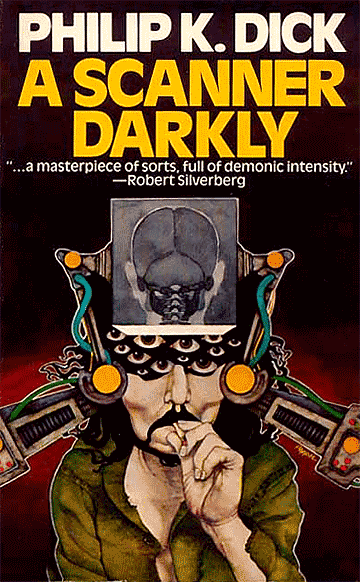
After Lord of the Rings, fantasy, and, by association, Sci-Fi experienced a sort of renaissance, where greater care was finally taken to focus on character. Le Guin sights Philip K. Dick, another of my faves, as an example. Sci-Fi had finally "figured itself out" in a way; it knew what it could do and now that it had been established, it could focus on the more difficult, portentous parts of life, such as human complexity.
It's interesting to see this in hindsight, because if anything, Sci-Fi/Fantasy has, ironically, grown in esteem in both the eyes of critics AND the public, rather a rare thing. And the appearance of Mrs. Brown in Sci-Fi is nowadays so commonplace it's not even an event. Her name is Ender Wiggen, her name is Darth Vader, her name is Shadow, Jack Torrance, Father and Son, Bob Arctor, Arthur Dent, all of these incredible characters burned into our brains, representing a panorama of life that might, just might, make even Virginia Woolf whistle in amazement.



Monday, September 6, 2010
I think its funny--
--how Jacob Flanders is barely a character in his own novel.
Well, that's exaggerating a bit.
But not much.
I mean let's be honest, the vast majority of instances we see him is through other's eyes, and a lot of the novel is just people randomly mentioning him.
Well, that's exaggerating a bit.
But not much.
I mean let's be honest, the vast majority of instances we see him is through other's eyes, and a lot of the novel is just people randomly mentioning him.
Saturday, September 4, 2010
New Criticism and Kew Gardens
Something hints to me that John Oakland is a New Critical critic. I don't know what it is, the name, the subject matter, or the fact that he uses the words "unity" or "organic" or varieties of the two somewhere between 50-100 times. In fact, his entire article hinges on dispelling the belief that K.G. has "no form to it" and demonstrating the stories "harmonious, organic optimism." However, Woolf's work, I think, is designed to be disdainful of a classic new critical interpretation; the fact is, the mind is not logical, and is not unified, and is rarely even coherent except in the most broadly simplified sense--all three of these Woolf tries to put into her work, and all three make any major New Critical interpretation a difficult thing to accomplish.
Oakland makes the effort to "fuse"--his words--the episodic structure of K.G. by demonstrating that they all share the same common elements, this in turn proving a "realization of a continuing character identification composed collectively of these moments." And he uses everything from the synthesis of man and machine to the relative basic human behavior of holding hands to demonstrate the fusion he sees in the story, thereby making it cohesive and unifying it and a bestowing upon it the New Critic's wet dream of organic unity.
Certainly K.G.'s more inherent linearity--anything's more linear than Mark on the Wall--makes it more open to this sort of interpretation; however, I don't think Woolf's story indicates the New Critical idea of unity as much as it indicates the New Critical idea of tension, that is, juxtaposition of seemingly unrelated events to create a living sort of conflict in the story that electrifies the sentence's on the page; from her, the New Critics sought to resolve this tension by finding the organic unity, but perhaps, in this case, Woolf--purposefully or unpurposefully--doesn't wish to resolve the tension between the competing facets of the story: the supposed triviality of the snail's conflict with the differing conflicts between the human characters, the bright colors of the garden filtering to the grey of the omnibuses, even those destructive points on those parasols. But the story never seems intent to unify these distinctions--instead, as we said in class, it zig-zags from one part to the next to the next to the next without any obvious separation or fluidity. If Woolf were a mathematician, she would be working with multivariable calculus instead of algrebra; the latter focuses on linearity, but the former twist and coil and fracture into a thousand different points, saved from incoherence merely by the fact that you can connect the dots--just not, I don't think, in the way that Oakland is intending.
Oakland makes the effort to "fuse"--his words--the episodic structure of K.G. by demonstrating that they all share the same common elements, this in turn proving a "realization of a continuing character identification composed collectively of these moments." And he uses everything from the synthesis of man and machine to the relative basic human behavior of holding hands to demonstrate the fusion he sees in the story, thereby making it cohesive and unifying it and a bestowing upon it the New Critic's wet dream of organic unity.
Certainly K.G.'s more inherent linearity--anything's more linear than Mark on the Wall--makes it more open to this sort of interpretation; however, I don't think Woolf's story indicates the New Critical idea of unity as much as it indicates the New Critical idea of tension, that is, juxtaposition of seemingly unrelated events to create a living sort of conflict in the story that electrifies the sentence's on the page; from her, the New Critics sought to resolve this tension by finding the organic unity, but perhaps, in this case, Woolf--purposefully or unpurposefully--doesn't wish to resolve the tension between the competing facets of the story: the supposed triviality of the snail's conflict with the differing conflicts between the human characters, the bright colors of the garden filtering to the grey of the omnibuses, even those destructive points on those parasols. But the story never seems intent to unify these distinctions--instead, as we said in class, it zig-zags from one part to the next to the next to the next without any obvious separation or fluidity. If Woolf were a mathematician, she would be working with multivariable calculus instead of algrebra; the latter focuses on linearity, but the former twist and coil and fracture into a thousand different points, saved from incoherence merely by the fact that you can connect the dots--just not, I don't think, in the way that Oakland is intending.
Subscribe to:
Comments (Atom)